
Surely there can’t be microplastics in snow
- John McNeil, MD
Unfortunately there are. And if they are Antarctica snow then there are definitely more in US snow.
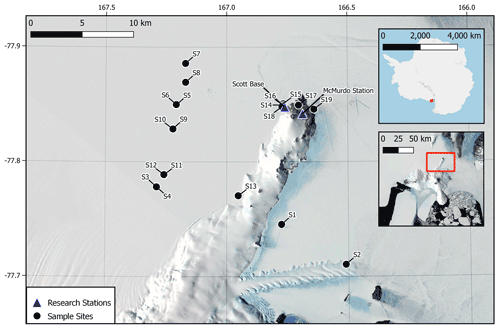
“Site locations for snow sample collections across the Ross Island region of Antarctica” from Aves et al. (2022), First evidence of microplastics in Antarctic snow, The Cryosphere, 16, 2127–2145, licensed under Creative Commons Attribution 4.0 International (CC BY 4.0). Original source: https://doi.org/10.5194/tc-16-2127-2022. No changes made.
A 2022 study found that every sample of snow from Antarctica tested (19 different sites) contained microplastics.
The study notes that microplastics end up in remote locations due to the ‘plastic cycle’ - plastic starts as fossil fuel, is consumed by humans, is disposed of, and then degrades into small particles that persist for centuries in the environment. Due to their minute size and low density they effortlessly transition between ground, water, and air. Using backward air mass trajectory modeling, the investigators estimated that sampled microplastics could have travelled over 300 miles before landing in the Antarctic snow. They also not that some particles likely came from way-finding flags that are common in Antarctica.
The average concentration of microplastics was 29 particles per liter of snow. Most were less than 1000 µm and the most common plastic was polyethylene terephthalate (PET). Interestingly, this was a higher concentration of microplastics than was found in the surrounding Ross Sea. Fiber was the most common morphotype, which is in line with most environmental sampling findings.
This was a rigorous study with blank testing and the researchers even cataloged the composition of every item of clothing worn by the investigators collecting the snow specimens (see below).
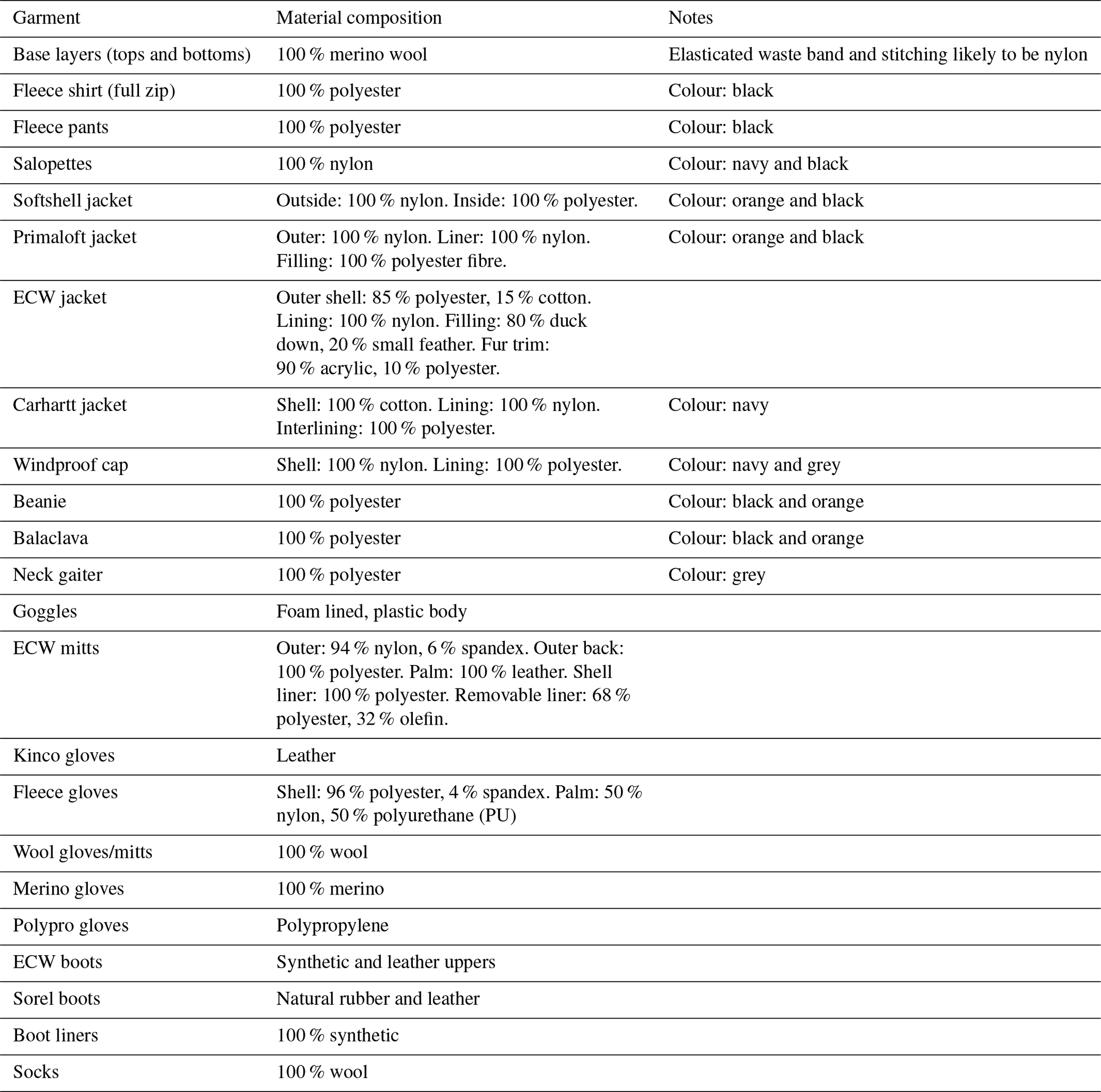
“Catalogued material used in New Zealand Antarctic programme gear.” from Aves et al. (2022), First evidence of microplastics in Antarctic snow, The Cryosphere, 16, 2127–2145, licensed under Creative Commons Attribution 4.0 International (CC BY 4.0). Original source: https://doi.org/10.5194/tc-16-2127-2022. No changes made.